How to Style a Coffee Table
Design Ideas
By Chelsea King | Published July 16, 2026
Your coffee table is one of the most overlooked opportunities to express your personal style. Whether you've just bought a new one or you're refreshing the room you've had for years, knowing how to style a coffee table makes a real difference. A well-styled surface can pull together your entire seating area, add warmth, and make your living room feel like it was designed with intention.
The good news? You don't need a design degree to nail it. A few simple rules — the right mix of heights, textures, and materials — are all it takes. In this guide, we'll walk you through everything you need to know, from the foundational design principles to specific ideas for every popular interior style.
Whether your home is modern and minimal, warm and traditional, or somewhere in between, these tips will help you create a coffee table setup that looks intentional, balanced, and completely you.
To style a coffee table well, group objects in odd numbers (sets of 3), vary the height of your pieces, layer a tray to create visual anchors, mix at least three different textures or materials, and leave 30–40% of the surface empty. Aim for a balance of decorative and functional items — candles, a small plant, a stack of books, and a tray are the classic starting formula.
Basics
What Are the Basic Rules for Styling a Coffee Table?
The most effective coffee table styling follows three core rules: odd-number groupings, height variation, and intentional negative space. These aren't arbitrary design preferences — they reflect how the human eye naturally seeks visual balance.

Start by grouping your objects in threes or fives rather than pairs. Odd-number groupings feel more dynamic and organic than even arrangements. Next, vary the heights of your objects significantly — pair something tall (a vase, a sculptural candle) with something medium (a stack of books) and something low and flat (a small tray or decorative bowl). This staggering creates a sense of depth and movement even on a flat surface.
Finally, resist the urge to fill every inch of the table. Leaving 30–40% of the surface open gives the eye somewhere to rest and prevents the display from feeling cluttered. Negative space is not wasted space — it's what makes your curated pieces stand out. Think of the empty areas as breathing room that makes everything else look more intentional.
Layering
How Do You Layer a Coffee Table for a Designer Look?
Layering is the technique professional designers use to make a coffee table display look intentional rather than assembled. The secret is building your arrangement in distinct layers, each serving a specific visual purpose.


The goal is a natural diagonal line of varying heights when you view the table from the side. That invisible diagonal — tall in the back, low in the front — is what gives styled coffee tables their polished, layered quality. You're essentially building a small still-life scene, not just placing items on a surface.
Displays
What Should You Put on a Coffee Table?
The best coffee table displays combine both decorative and functional objects. Purely decorative styling can feel cold and untouchable, while purely functional items — remote controls, coasters, magazines — can look haphazard without some intentional arrangement.
The classic formula includes five categories of objects: a tray (to create visual structure and corral smaller items), a stack of books (2–3 hardcover books add height, color, and personality), a plant or florals (a small potted succulent, a bud vase with stems, or a low bowl of greenery adds life and organic texture), a candle or sculptural object (adds height and a tactile element), and one functional piece like a beautiful coaster set or a small decorative bowl for keys or remotes.
You don't need all five at once — start with three and add from there. Avoid placing more than 5–6 objects total, and always keep one item that has personal meaning: a book you love, a candle in your favorite scent, a small souvenir from a meaningful trip. That personal touch is what makes a styled space feel lived-in rather than staged.
Coffee Table Styling Elements at a Glance
| Element | Purpose | Height Role | Best For | Swap It For |
|---|---|---|---|---|
| Tray | Anchors groupings, corrals smaller items | Low foundation | Every style — the single most essential piece | Decorative bowl, stack of art books |
| Stacked books | Adds height, color, and personality | Mid-height base | All styles; 2–3 hardcovers work best | Coffee table photography books, art volumes |
| Plant or florals | Adds life, organic texture, and natural color | Tall or mid accent | Boho, farmhouse, transitional, traditional | Succulent, bud vase with stems, air plant |
| Candle | Height, warmth, scent, and visual interest | Tall accent | Modern, traditional, transitional | Sculptural figurine, tall ceramic vase |
| Decorative object | Personal touch and conversation piece | Low or mid | Every style; reflects personal taste | Ceramic bowl, geode, small art piece |
| Coaster set | Functional anchor that doubles as decor | Low | All styles; keeps the look lived-in | Pretty tray, small catchall dish |
Modern or Minimalist
How Do You Style a Coffee Table for a Modern or Minimalist Home?
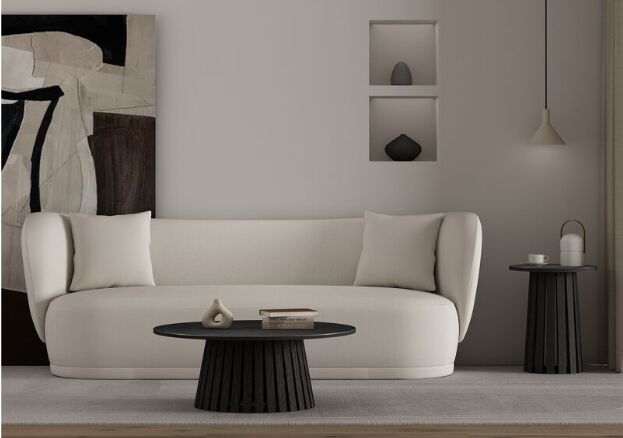
Modern and minimalist coffee table styling is the most searched aesthetic in 2026, driven by the ongoing popularity of clean-line furniture, neutral palettes, and a less-is-more philosophy. The key principle: every object on the surface must earn its place.
For a minimalist display, limit yourself to 2–3 objects maximum. Choose pieces with simple geometric forms — a square tray in matte black or white concrete, a single sculptural vase in a warm neutral, and one small plant like a succulent or trailing pothos in a minimal ceramic pot. The color palette should stay tightly edited: whites, creams, warm grays, and one organic material like natural wood or rattan. Avoid anything fussy, ornate, or patterned.
Texture becomes especially important in minimalist styling because you're working with so few pieces. Pair a smooth matte ceramic with a rough-textured stone coaster and the warm grain of a wood tray. Those textural contrasts do the visual work that color and pattern do in more maximalist approaches. Mathis Home's home décor collection includes a wide range of minimal, modern accents that work beautifully in this aesthetic — from clean-line vases to architectural candle holders.
Traditional or Classic
How Do You Style a Coffee Table for a Traditional or Classic Home?
Traditional coffee table styling welcomes more richness, pattern, and layering than its modern counterpart. The aesthetic is rooted in comfort, symmetry, and a sense of collected history — pieces that look like they've been gathered over time rather than selected from a catalog in a single afternoon.
In a traditional living room, symmetry is your friend. Consider placing matching candlesticks or small decorative lamps on either side of a central arrangement, or use a pair of matching vases at different heights to frame a central object like a floral arrangement or decorative tray. Books with leather or cloth covers, botanical art prints propped against the wall behind the table, and small porcelain or ceramic figures all fit naturally.
The color palette can be richer and deeper — deep blues, burgundy, forest green, antique gold, and warm ivory all work well. Choose materials like brass, aged bronze, dark wood, and natural stone. A classic arrangement might include a leather-bound book stack, a small silver or brass bowl, a floral arrangement in a classic urn-style vase, and tapered candles in traditional candleholders. Browse Mathis Home's living room décor collection to explore traditional accent pieces that complement classic furniture.

Bohemian or Eclectic
How Do You Style a Coffee Table for a Bohemian or Eclectic Home?
Boho and eclectic coffee table styling is the most forgiving and arguably the most fun — it celebrates personal expression, global influences, and the beauty of layering patterns, textures, and objects from different eras and cultures. The only rule: intentional abundance rather than random clutter.
Layer freely with macramé coasters, woven rattan trays, colorful candles in unexpected hues, and collected objects that tell a personal story — a small sculpture from a market, a stack of travel books, a feather or crystal. Mixing metals (brass, copper, aged silver) is encouraged in boho styling, as is combining natural materials like jute, wood, stone, and ceramic. Plants are essential: a trailing pothos, a small cactus cluster, or a low terrarium add the organic energy that defines the aesthetic.
Color can be bold and layered — jewel tones, earthy terracottas, deep indigo, and warm saffron all find a home in eclectic styling. The key difference between a beautifully curated boho coffee table and a cluttered one is intentionality: even with many objects, there should still be a visual anchor (a large tray or a bold book stack), some variation in heights, and a color story that ties it all together.

Farmhouse or Transitional
How Do You Style a Coffee Table for a Farmhouse or Transitional Home?
Farmhouse and transitional styling strikes the sweet spot between warm comfort and clean simplicity — it's approachable, texture-rich, and easy to refresh seasonally. Think natural wood, white linens, galvanized metal, woven baskets, and botanical elements that bring the outdoors in.
For a farmhouse coffee table, start with a weathered wood tray or a galvanized metal catchall as your foundation. Fill it with a small mason jar vase with wildflowers or eucalyptus stems, a white ceramic candle, and a stack of casually placed books with neutral covers. Keep the palette in the cream-to-warm-gray range with natural wood tones and soft greens. Lanterns, wooden beads, and cotton stems are signature farmhouse accents that work beautifully in this context.
Transitional styling is more polished than pure farmhouse but retains the warmth — think linen textures, marble or stone surfaces, clean-lined trays, and greenery. The transitional palette is slightly cooler and more sophisticated: warm whites, soft taupes, sage green, and brushed gold or pewter hardware. Transitional coffee table styling works with almost any furniture and is the most versatile approach for homeowners who want to refresh the look seasonally without changing the pieces themselves.

Seasonal Refresh
How Do You Refresh Your Coffee Table Styling for Each Season?
One of the most practical strategies for keeping your living room feeling fresh all year is treating your coffee table as a rotating seasonal display. Because the surface area is small and the stakes are low, it's the easiest place in your home to update your décor without investing in new furniture.
- In spring and summer, swap in lighter, airier elements: white or cream candles, fresh or faux botanicals in green and blush tones, a glass or rattan tray, and natural textures like seagrass or linen.
- For fall, bring in warmth with deep amber and terracotta candles, small pumpkins or gourds alongside your regular objects, and darker book covers or throws nearby.
- In winter, lean into metallic accents — silver, gold, and brushed brass all reflect holiday light beautifully — alongside evergreen sprigs, white pillar candles, and cozy textural elements like a small woven bowl.
The investment for a seasonal refresh is minimal: a new candle, fresh flowers from the grocery store, or a small decorative object from Mathis Home's home décor collection can completely transform the look. Keep your core pieces — the tray, the book stack, the main plant — and simply rotate the accent elements. That consistency of foundation with seasonal variety is the secret to a coffee table that always looks intentional.
Common Mistakes
What Are the Most Common Coffee Table Styling Mistakes to Avoid?
Even beautifully chosen objects can look off if a few key mistakes derail the arrangement. The most common error is going too symmetrical — placing identical items on both sides of the table creates a formal, stiff look that doesn't suit most living rooms. Another common mistake is choosing all objects at the same height, which results in a flat, uninteresting display without any visual rhythm.
Overcrowding is the second-most-common issue: when every inch of the table is covered, the eye doesn't know where to land. Less is almost always more. Similarly, mixing too many metals, colors, or competing patterns without a unifying element makes the table look chaotic rather than eclectic. Always have one anchor — a tray, a bold book stack — that ties the other elements together.
Finally, don't forget scale. Objects that are too small for the table will look lost, while objects that are too large will overwhelm the surface and make the room feel cramped. As a general guideline, your tallest object should reach no more than one-third the height of the table itself, and your arrangement should occupy no more than two-thirds of the total surface area.
Focal Point
Make Your Coffee Table a Focal Point
Your coffee table is small in scale but significant in impact. With the right approach — odd-number groupings, layered heights, a mix of textures, and intentional negative space — you can transform it from a place to set down a glass into a genuine design moment in your living room.
Whether your home is modern, traditional, boho, or transitional, the principles are the same. Start simple, build up gradually, and don't be afraid to edit back. The goal is a display that feels personal, balanced, and refreshingly easy to live with every day.
Ready to refresh your living room décor? Explore Mathis Home's home décor collection — with free local delivery and over 260,000 products to choose from, you'll find exactly the right accents to make your coffee table (and your whole living room) feel like home. You can also visit any of our 43 locations for a complimentary design consultation with one of our professional interior designers.
Frequently Asked Questions About Coffee Table Decor
What is the best way to style a coffee table?
The best approach is to group objects in odd numbers (sets of 3 or 5), vary heights significantly across your grouping, anchor everything with a tray or base layer, and leave 30–40% of the surface empty. A reliable starting formula is a tray + stacked books + a plant or vase + one small decorative object. From there, add or swap based on your personal style and the season.
How many items should be on a coffee table?
Most designers recommend 3–6 objects on a coffee table, depending on its size. Smaller coffee tables (under 40 inches) look best with 3 objects; larger tables (48 inches and above) can support 4–6 without feeling cluttered. When in doubt, remove one item — you can always add back, but overcrowding is harder to fix visually.
How do you style a small coffee table?
For small coffee tables, simplicity is your best friend. Limit the display to 2–3 objects: a small tray or low bowl as an anchor, one taller element like a slim vase or single candle, and one organic element like a small succulent or a few stems. Keep colors and materials tightly edited — two complementary tones and one material (wood, ceramic, or metal) works best in a compact space.
What size tray should I use on a coffee table?
Your tray should cover roughly 30–40% of your coffee table's surface area. For a standard 48-inch rectangular coffee table, a tray in the 14×18-inch to 16×22-inch range works well. Round trays look beautiful on round or oval coffee tables and should be 12–18 inches in diameter depending on the table size. The tray doesn't need to be perfectly centered — slightly off-center placement actually looks more intentional.
How often should I change my coffee table styling?
Refreshing your coffee table styling every season — roughly four times a year — keeps your living room feeling current without requiring major investment. Swap one or two accent pieces (a new candle, fresh botanicals, a seasonal decorative object) while keeping your core foundation pieces in place. This approach is budget-friendly and takes less than ten minutes to execute once you have your core setup established.
Chelsea King is an SEO specialist at Mathis Home, specializing in furniture retail and eCommerce. With a background in education and finance, she creates research-driven, consumer-first content to help shoppers make confident, informed buying decisions.