Living Room Buying Guide
TV Stand vs. Media Console vs. Entertainment Center: What's the Difference?
By Chelsea King | Published March 11, 2026 | Updated September 30, 2026
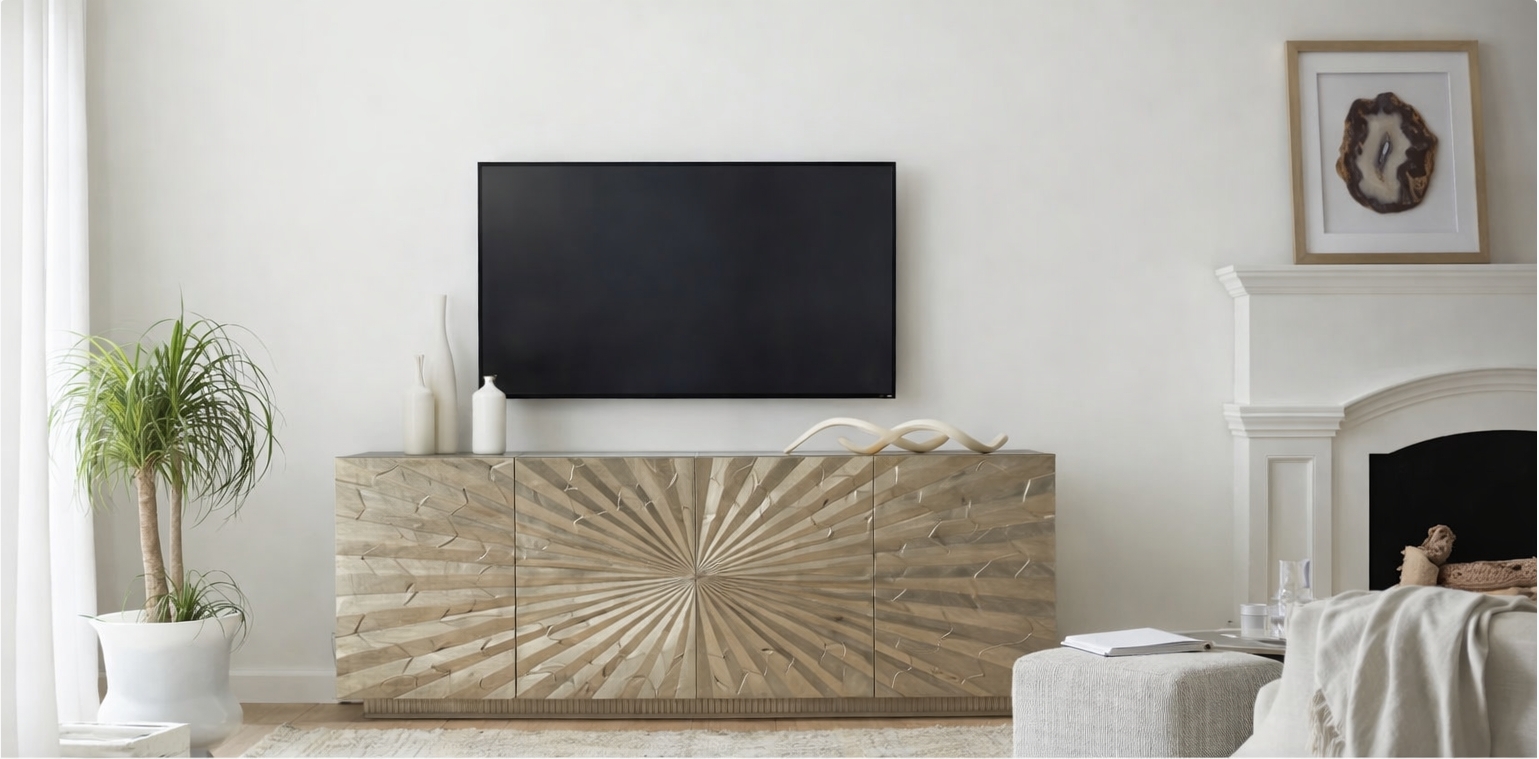
The terms get used interchangeably in stores and online, which is why shopping for one can be confusing. They usually describe different sizes, storage levels, and styles.
This guide defines each one, compares them side by side, and walks through how to choose the right fit for your living room. When you're ready, browse TV stands and media consoles to compare options.
Quick Answer
A TV stand is a compact piece built mainly to hold a television and a few devices. A media console is a longer, lower cabinet that adds closed storage, drawers, and cable management. An entertainment center is the largest option: a wall unit that surrounds the TV with towers, shelves, or a hutch. The right choice comes down to your TV size, your room, and how much you need to store.

What Is a TV Stand?
A TV stand is a piece of furniture designed primarily to support a television. It has a compact footprint and usually offers open shelves or a small cabinet for a streaming device, cable box, or soundbar. TV stands are also called TV consoles, media stands, TV units, or TV cabinets, and the names often overlap with media consoles.
- Footprint: compact, suited to apartments, bedrooms, and smaller living rooms
- Storage: minimal, typically open shelving or one or two small cabinets
- Best for: small to mid-size TVs and simple setups with only a few devices

What Is a Media Console?
A media console is a long, low-profile cabinet that supports a TV while adding more storage and style than a basic stand. Most media consoles include closed cabinets or drawers, and many add cord cutouts or cable management to keep electronics out of sight. Because they are wide and low, they often act as a decorative focal point in the living room.
- Footprint: wider and lower than a standard TV stand
- Storage: moderate, with doors, drawers, and room to hide devices and cords
- Best for: mid-size to large TVs in living rooms where style and storage both matter
- Common styles: modern, mid-century modern, transitional, and contemporary
.jpeg)
What Is an Entertainment Center?
An entertainment center is the largest and most storage-heavy of the three. It usually combines a console base with side towers, a bridge, or a hutch that frames the TV, creating a full-wall unit with shelving for books, decor, and electronics. Entertainment centers work best in larger living rooms and media rooms with space to spare.
- Footprint: large; plan for the full width and height of the wall
- Storage: extensive, with open and closed shelving around the TV
- Best for: households with multiple devices, gaming systems, and collections to display
TV Stand vs. Media Console vs. Entertainment Center: Quick Comparison
Each piece has a signature size and job. Use this table to see the differences at a glance.
| Feature | TV Stand | Media Console | Entertainment Center |
|---|---|---|---|
| Size | Small | Medium to large | Large |
| Storage | Minimal | Moderate | Extensive |
| Design focus | Functional | Stylish, low profile | Full-wall unit |
| Hides cords and devices | Limited | Usually | Usually |
| Best for | Small spaces | Most living rooms | Large rooms and media rooms |
TV Stand vs. Media Console: Which Is Better?
Neither is better in every room. Choose a TV stand when you want a compact, simple piece for a smaller TV and just a few devices. Choose a media console when you want a longer, lower piece that hides electronics and cords behind doors or drawers and anchors the look of the room. If you have a larger TV or more gear to store, a media console is usually the better fit.
TV Stand vs. Entertainment Center: Which Should You Choose?
The main difference is scale. A TV stand holds the TV and a few devices, while an entertainment center turns the whole wall into storage and display space. An entertainment center makes sense when you need lots of shelving and have the room for it; in a small or open living space, a TV stand or media console keeps the room from feeling crowded.
How to Choose the Right TV Furniture
Start with three measurements: your TV, your wall, and the space you walk through. Then match the piece to how you actually use the room.
- Go wider than the TV. Pick a piece wider than your TV so the screen doesn't overhang the edges, and confirm the manufacturer's listed weight capacity for your TV.
- Check the height. Aim for the center of the screen to sit near eye level from your usual seat. Low media consoles work well with tall seating or wall-mounted TVs.
- Count your devices. Streaming boxes, game consoles, and soundbars all need a place. More gear points toward a media console or entertainment center with cable management.
- Plan for small spaces. In apartments and small living rooms, a compact TV stand or a slim media console saves floor space. Browse Small Space Living for space-saving ideas.
- Secure tall pieces. For tall entertainment centers and TV furniture, follow the manufacturer's securing guidance included with the product.
For designer media storage, explore Design Studio media chests.
Frequently Asked Questions
What is another name for a TV stand?
A TV stand is also called a TV console, media stand, TV unit, or TV cabinet. Media console usually describes a longer, lower cabinet with more closed storage, and entertainment center describes a larger wall unit that surrounds the TV.
What is the difference between a console table and a TV stand?
A console table, also called a sofa table, is a narrow, taller table made for behind a sofa or in an entryway. A TV stand is lower and deeper, built to support a television and store devices. Check the listed weight capacity before placing a TV on any console table.
What is the best TV furniture for a small space?
For a small space, a compact TV stand or a slim media console usually works best. Both hold the TV and a few devices without taking over the room. Entertainment centers need more wall space and tend to crowd smaller rooms.
Which type works best for a large TV?
For a large TV, a media console or entertainment center is usually the better fit because both offer more width and storage. Choose a piece wider than the TV and confirm the manufacturer's weight capacity before buying.
Can a media console hold a TV?
Yes. A media console is designed to hold a TV on top while storing devices, cords, and media in its cabinets and drawers. Confirm the listed weight capacity and width against your TV before you buy.
Whether you want a simple TV stand, a stylish media console, or a full entertainment center, the right piece balances your TV size, your room, and your storage needs. Browse TV stands to find the fit for your living room, or explore console and sofa tables and Design Studio sofa tables to complete the space.
About the Author
Chelsea King is an SEO specialist at Mathis Home, specializing in furniture retail and eCommerce. With a background in education and finance, she creates research-driven, consumer-first content to help shoppers make confident, informed buying decisions.