Furniture Buying Guide
Credenza vs. Sideboard vs. Buffet vs. Hutch: What's the Difference?
By Chelsea King | Published September 29, 2026

Credenza, sideboard, buffet, and hutch all describe long storage pieces, and the names often get mixed up, even in stores. The differences come down to height, legs, storage style, and the room each one was designed for.
Below, you'll find a clear definition of each piece, a side-by-side comparison, and a simple way to choose the right one for your dining room, living room, or home office. When you're ready, browse sideboards and buffets to compare styles in person or online.
Quick Answer
A credenza is a long, low cabinet with doors, often on short legs or none, used for media, office, or dining storage. A sideboard is a long, low cabinet on legs with doors and drawers. A buffet is the dining room version of a sideboard, traditionally used for serving and storing dinnerware. A hutch is a base cabinet topped with an upper cabinet or shelves for display.
What Is a Credenza?
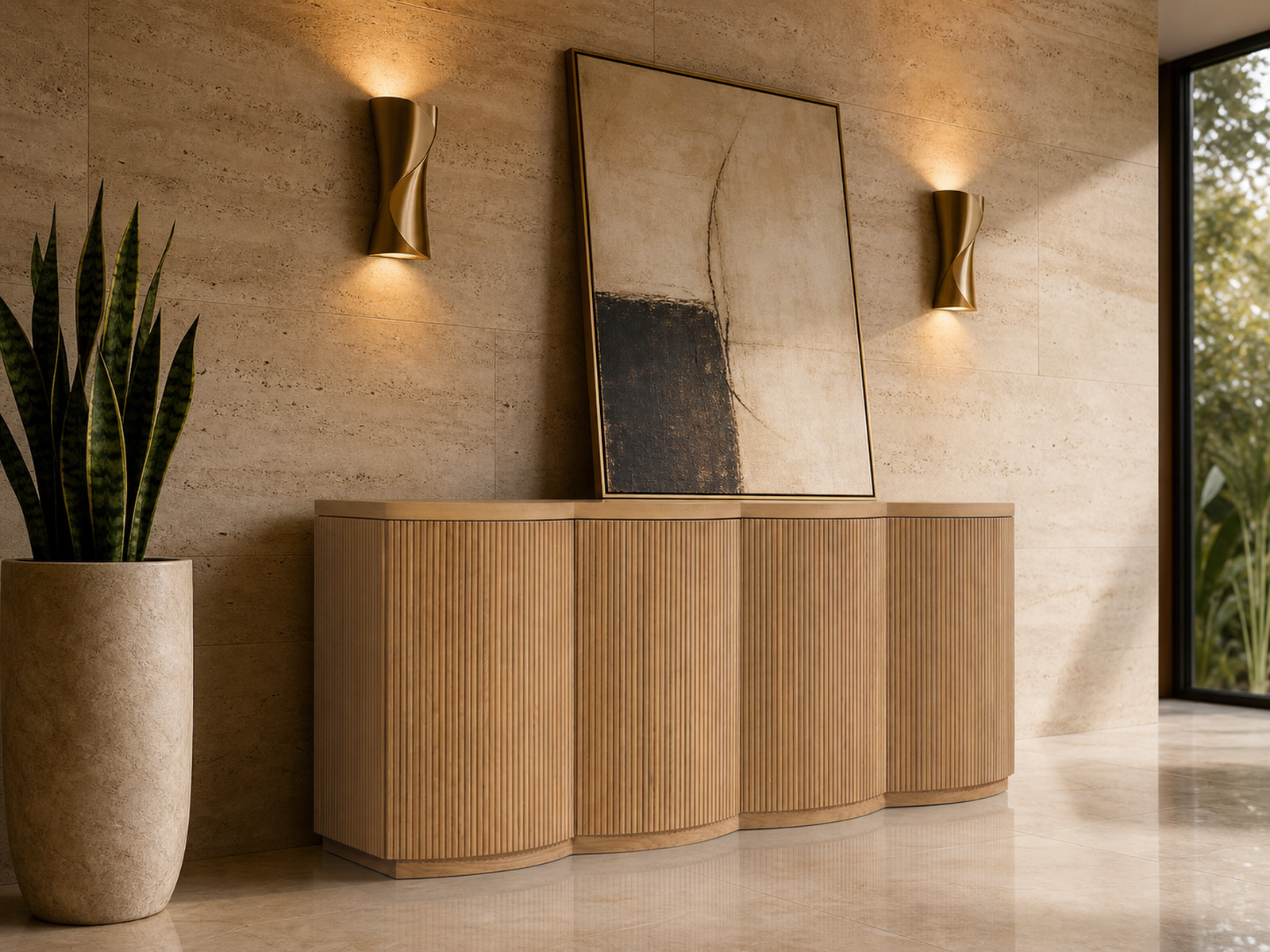
A credenza is a long, low cabinet with a flat top and closed storage behind hinged or sliding doors. Credenzas usually sit on short legs or directly on the floor, which gives them a clean, streamlined look. They are one of the most flexible storage pieces: under a TV in the living room, along a dining room wall, or behind a desk in a home office.
- Shape: long, low, and usually without drawers across the full front
- Storage: closed cabinets, often with adjustable shelves
- Best for: media storage, office files, and minimal, modern spaces
- Common styles: mid-century modern, contemporary, and transitional

What Is a Sideboard?
A sideboard is a long, low storage cabinet on visible legs, typically combining cabinet doors with drawers. It is the broadest of the four terms and describes pieces used in dining rooms, living rooms, and entryways. In a dining room, the top holds serving dishes or decor while drawers keep flatware and linens close by.
- Shape: long and low, raised on legs
- Storage: a mix of cabinets and drawers
- Best for: flexible storage in almost any room
- Shop: sideboards and buffets
What Is a Buffet?
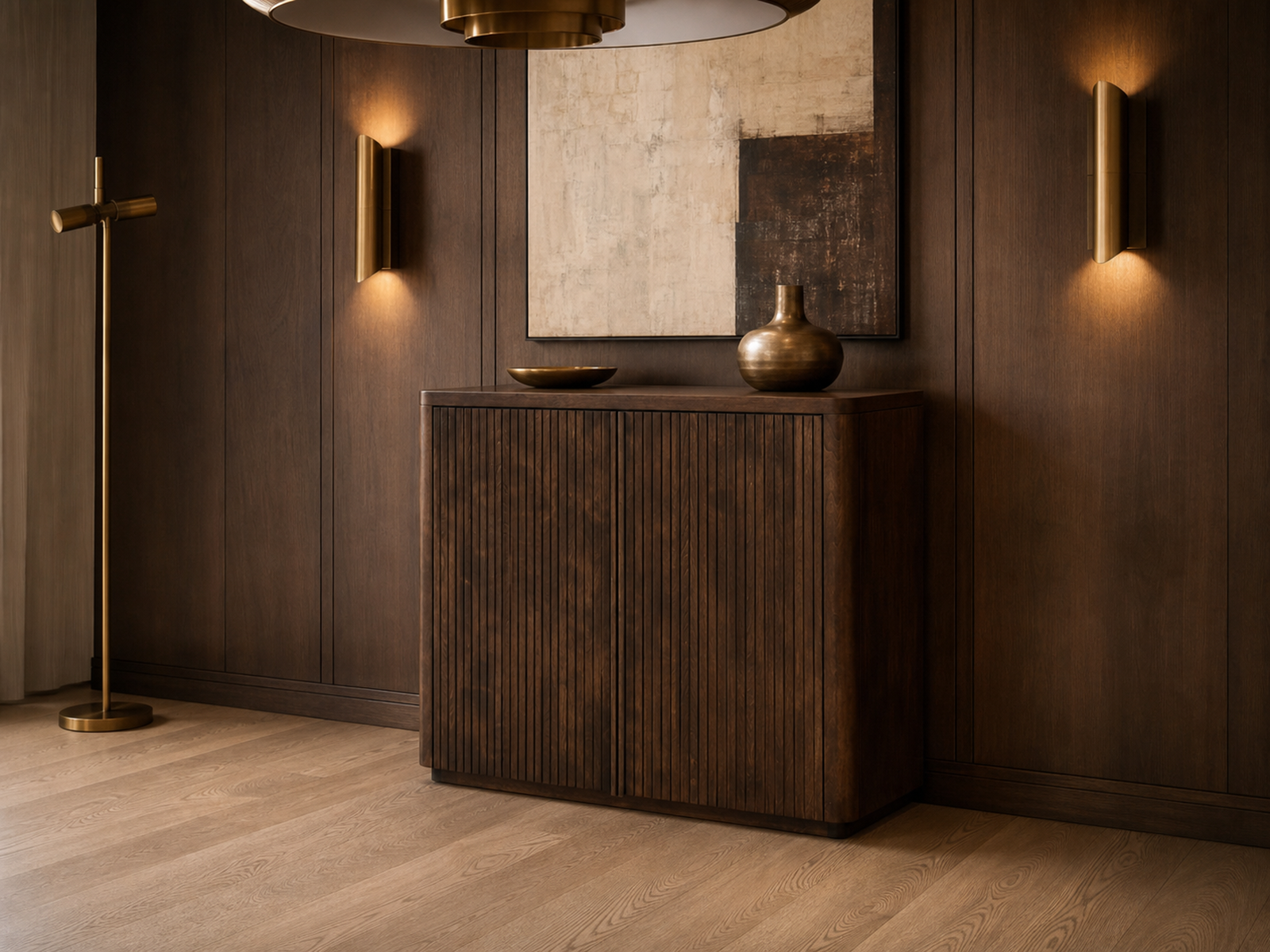
A buffet is a dining room storage cabinet designed for serving and for holding dinnerware, table linens, and serving pieces. The name comes from its role at meals: the top works as a serving surface for food during gatherings. Buffets are often larger than sideboards, and some have cabinets that reach closer to the floor.
- Shape: long, low to medium height, sized for the dining room
- Storage: cabinets and drawers for dishes, glassware, and linens
- Best for: hosting, holiday meals, and dining room storage
What Is a Hutch?
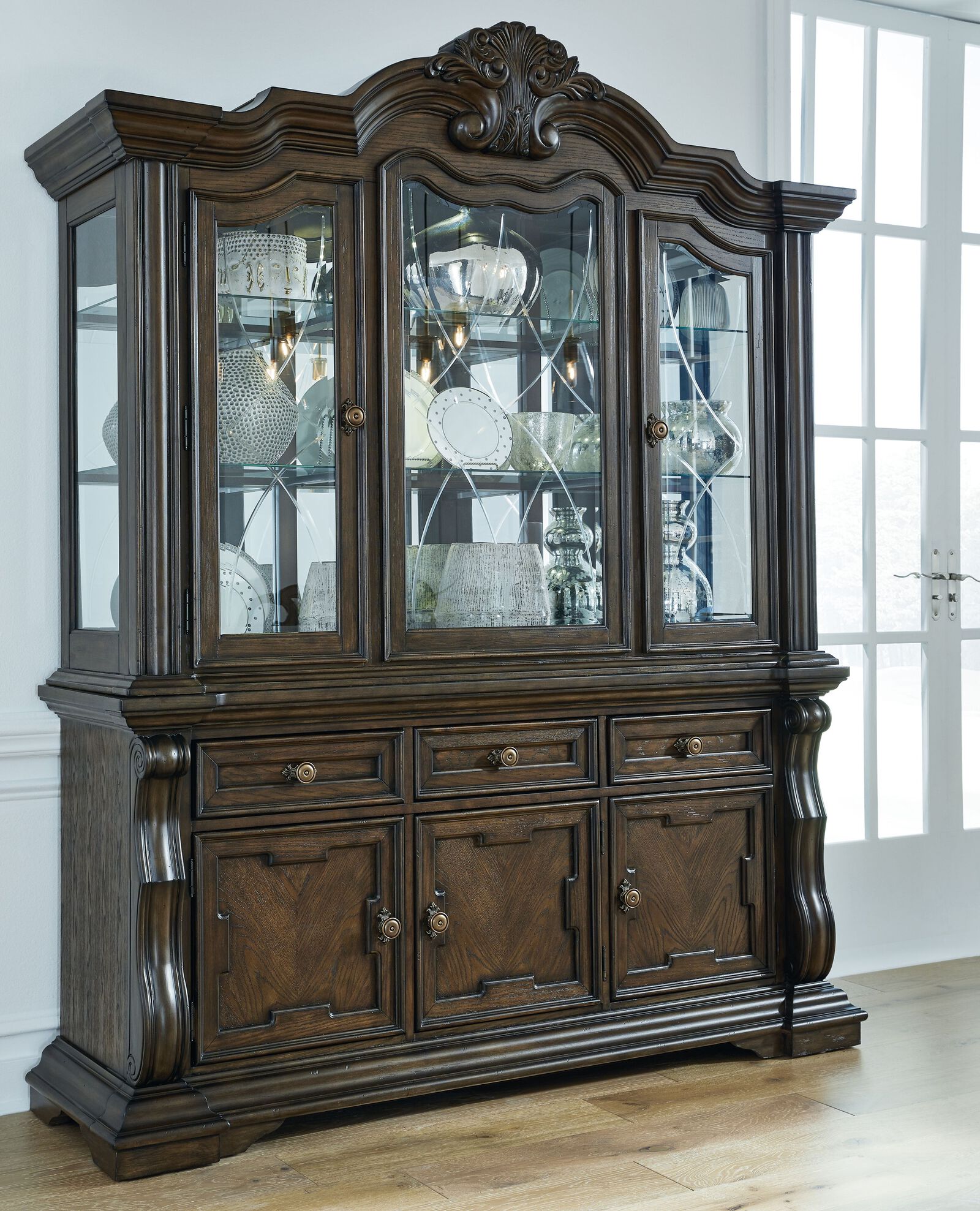
A hutch is a two-part piece: a base cabinet, similar to a buffet, topped with an upper cabinet or open shelving. The upper section is usually for display, often behind glass doors, which makes a hutch a natural home for fine china and collections. Because it is tall, a hutch adds vertical storage without taking extra floor space.
- Shape: tall, with a base cabinet and an upper display section
- Storage: closed base storage plus display shelving
- Best for: showing off dishes and collections; see display and china cabinets
Credenza vs. Sideboard vs. Buffet vs. Hutch: Quick Comparison
The four pieces overlap, but each has a signature shape and job. Use this table to see the differences at a glance.
| Feature | Credenza | Sideboard | Buffet | Hutch |
|---|---|---|---|---|
| Height | Low | Low | Low to medium | Tall (base plus upper cabinet) |
| Typical legs | Short legs or none | Visible legs | Legs or cabinet to the floor | Varies |
| Storage | Doors, often sliding | Doors and drawers | Doors and drawers | Base storage plus display shelves |
| Common rooms | Living room, office, dining | Dining, living, entryway | Dining room | Dining room, kitchen |
| Best for | Media, files, streamlined storage | Flexible everyday storage | Serving and dinnerware storage | Displaying dishes and collections |
Sideboard vs. Buffet: Is There a Difference?
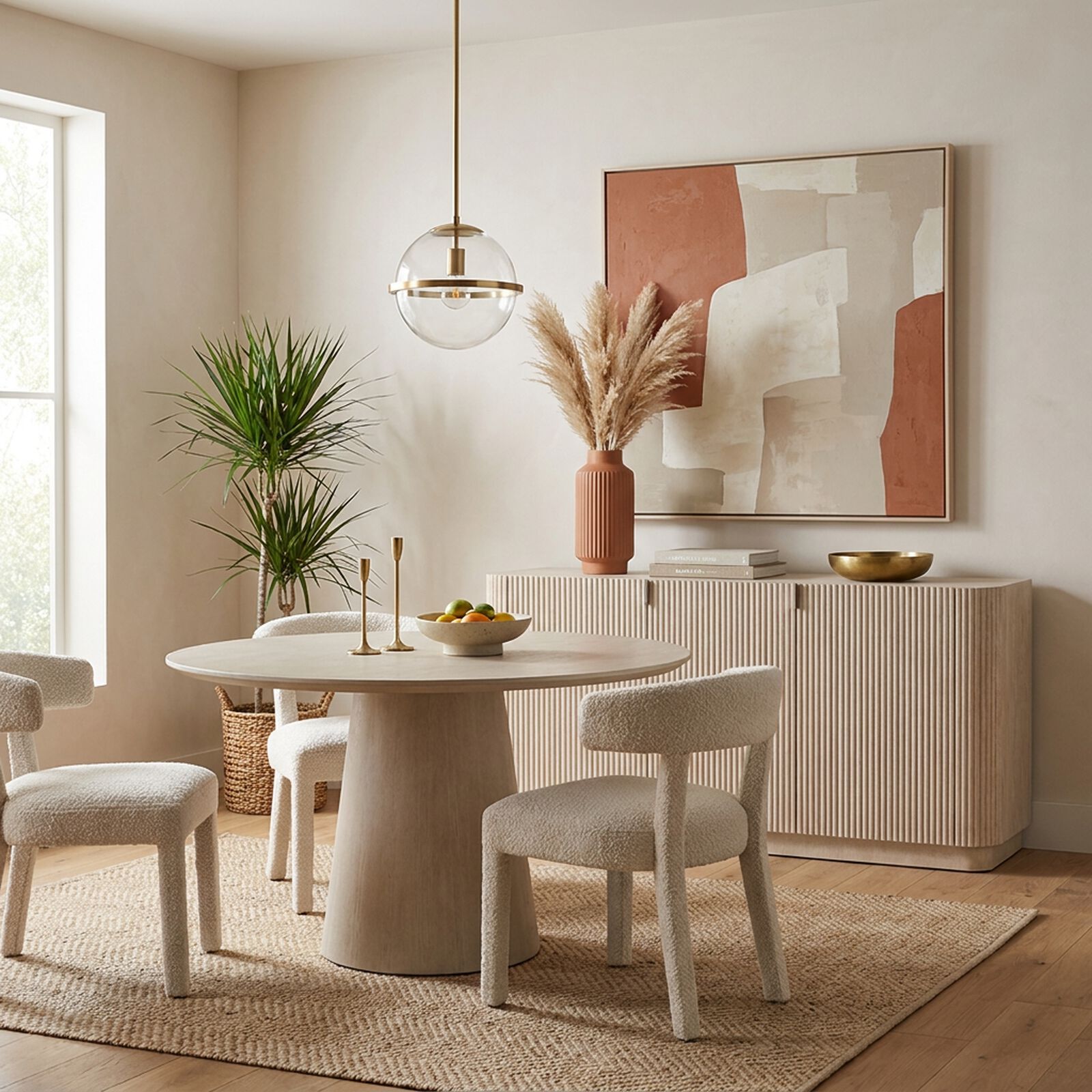
In everyday shopping, not much. Most people and retailers use sideboard and buffet interchangeably for a long, low dining storage cabinet. The traditional distinction is purpose: a buffet belongs to the dining room and is built for serving, while a sideboard is a general-purpose piece that can move from room to room.
Credenza vs. Sideboard: Which Should You Choose?
Choose a credenza when you want a streamlined, low piece with closed storage, especially under a TV or in a home office. Choose a sideboard when you want drawers and doors together for everyday dining or living room storage. If the piece will hold electronics, a credenza with cord openings in the back is usually the better fit.
Credenza vs. Buffet: What's the Difference?
A buffet is made for the dining room and for serving, while a credenza is a flexible cabinet you can use almost anywhere. Buffets often include drawers for flatware and linens; credenzas usually rely on cabinet doors and shelves. If you host often, a buffet keeps serving pieces close to the table.
How to Choose the Right Storage Piece
Start with the room and what you need to store, then measure your wall and walkway.
- Match the room. Dining room storage points to a buffet, sideboard, or hutch. A living room or office usually calls for a credenza or sideboard.
- Decide on display vs. hidden storage. Want to show off dishes? Choose a hutch. Prefer everything behind doors? A credenza or sideboard keeps things tidy.
- Measure the wall and walkway. Leave comfortable room to walk and to pull out dining chairs. A shallower piece helps in narrow rooms.
- Plan for electronics. If the piece will hold a TV or devices, look for cord openings and confirm the manufacturer's weight capacity.
- Secure tall pieces. For hutches and other tall cabinets, follow the manufacturer's securing guidance included with the product.
Compare more options: display and china cabinets, living room cabinets and chests, or Design Studio media chests for designer storage.
Frequently Asked Questions
Is a sideboard the same as a buffet?
Today the two names are mostly interchangeable, and many retailers group them together. Traditionally, a buffet is the dining room serving piece, while sideboard is the broader term for any long, low storage cabinet that can work in a dining room, living room, or entryway.
Can a credenza be used as a TV stand?
Yes. A low credenza makes a good TV stand because it is long, low, and offers closed storage for devices. Confirm the manufacturer's listed weight capacity and width against your TV, and check for cord openings in the back panel.
What is the difference between a hutch and a buffet?
A hutch adds an upper cabinet or open shelving on top of a base cabinet, creating a tall piece for displaying dishes and collections. A buffet is only the low base, with a flat top you can use for serving or decor.
Where should you put a credenza?
A credenza works in almost any room. Place it under a TV in the living room, along a wall in the dining room for dinnerware and linens, or behind a desk in a home office for files and supplies.
What size sideboard should I get for my dining room?
Measure the wall first and leave comfortable walking space between the sideboard and your pulled-out dining chairs. A sideboard that is shorter than the dining table usually looks balanced, and a shallower depth helps in narrow rooms.
Whether you need a credenza for your media, a buffet for hosting, or a hutch to display your dishes, the right piece balances your room, your storage, and your style. Browse sideboards and buffets to find the fit for your home, or pair it with a TV stand or bar cabinet to complete the space.
About the Author
Chelsea King is an SEO specialist at Mathis Home, specializing in furniture retail and eCommerce. With a background in education and finance, she creates research-driven, consumer-first content to help shoppers make confident, informed buying decisions.